Economist — Independent researcher and essayist
Order is not created. Disorder is displaced.
Anthropy is the hypothesis that social systems displace disorder rather than resolve it — in space, in time, or between social groups. This site gathers a research corpus devoted to testing this hypothesis: six Anthropy Working Papers, two books, publications and resources designed to be read, cited and discussed.
Three axes for reading transfers
Disorder does not disappear. It shifts to another place, another time, or other groups. Anthropy aims to make these displacements visible.
A contemporary frontier
Attention as receptacle
With data centers and generative AI, the three axes intersect in four coupled registers: energy, matter, territory, attention. The apparent order of the interface rests on burdens displaced offstage — and attention becomes one of the receptacles in which disorder is most immediately absorbed.
Read AWP-06 — Digital Infrastructures and Technological Debt →Anthropie Working Papers
The Anthropy Working Papers series formalises the hypothesis, tests it across deep history, and applies it to contemporary objects: public debt, the energy transition, independent research.
What is anthropy? Principles of a hypothesis
Anthropy is the hypothesis that every stable local social order is built by exporting its disorder to other places, other times, or other social groups. This founding text argues …
DOI : 10.5281/zenodo.19431208
3.3 million years in one principle
Anthropy traverses 3.3 million years of human history across seven configurations — from the first tool to the digital meta-programme. The displacement of disorder is a structural …
DOI : 10.5281/zenodo.19433086
Public debt and anthropy: who really pays for disorder?
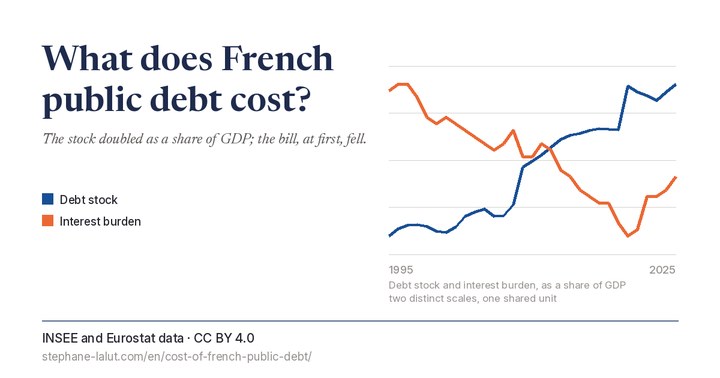
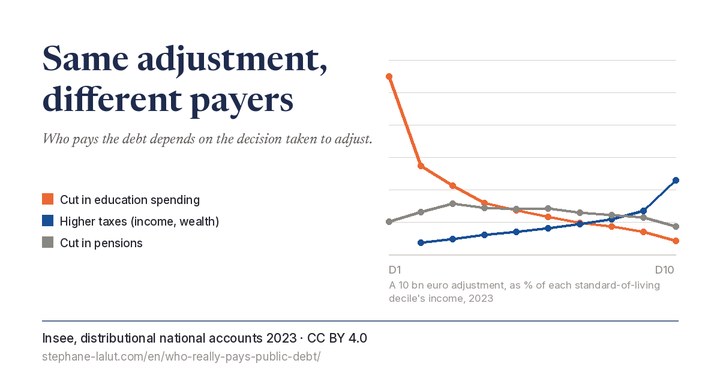
Public debt is not a simple accounting balance: it is a mechanism of temporal and social entropic transfer. This working paper applies the framework of anthropy to French public …
DOI : 10.5281/zenodo.19434094
Energy transition or entropic transfer?
Does the energy transition reduce disorder or merely displace it? This working paper examines anthropic mechanisms in contemporary energy policies: externalised extraction, …
DOI : 10.5281/zenodo.19439921
Thinking outside the walls: notes on independent research
Does the academic field displace epistemic disorder toward its margins? This working paper applies the framework of anthropy to the field itself, examines relegation mechanisms, …
DOI : 10.5281/zenodo.19440866
Digital Infrastructures and Technological Debt
Existing analyses of digital infrastructures often treat materialist critique, opacity studies, and environmental footprint accounting as separate approaches, thereby missing the …
DOI : 10.5281/zenodo.20077993
The corpus
The anthropic framework extends across several formats: working papers, books, reference pages and publications in the intellectual press. The aim is not to multiply formats but to make the same mechanism visible through different objects — debt, energy, deep history, epistemic order.
Books

ANTHROPIE – Ordre ici. Dette ailleurs
In French
L'ouvrage fondateur du cadre anthropique. En 606 pages, l'hypothèse selon laquelle les systèmes sociaux déplacent le désordre plutôt qu'ils ne le résolvent est déployée à travers l'histoire longue, l'économie, les finances publiques et l'épistémologie. Ordre ici. Dette ailleurs.
ISBN : 978-2-9586347-2-8

Dette Publique : Qui paie vraiment ?
In French
La dette publique n'est pas un solde à contenir mais un mécanisme de transfert. Ce livre pose la question non plus combien, mais qui paie — et par quels canaux le coût se déplace vers les générations futures et les groupes sociaux les moins mobiles.
ISBN : 978-2-9586347-3-5

Livresque des mots
In French
Anthologie inédite & éclectique de citations
Une anthologie qui refuse l'ordre alphabétique et thématique pour privilégier la surprise des rencontres. 4 680 citations, 1 380 voix, 25 siècles de génie humain, tissés en un fil d'Ariane subtil. Quarante ans de passion littéraire pour offrir non un classement, mais un voyage.
ISBN : 978-2-9586347-0-4
Publications
Published and reviewed in Alternatives Économiques, La Vie des idées, En attendant Nadeau, Terrestres, Nonfiction, Le Temps and other intellectual press outlets.
View publications →